Where this started
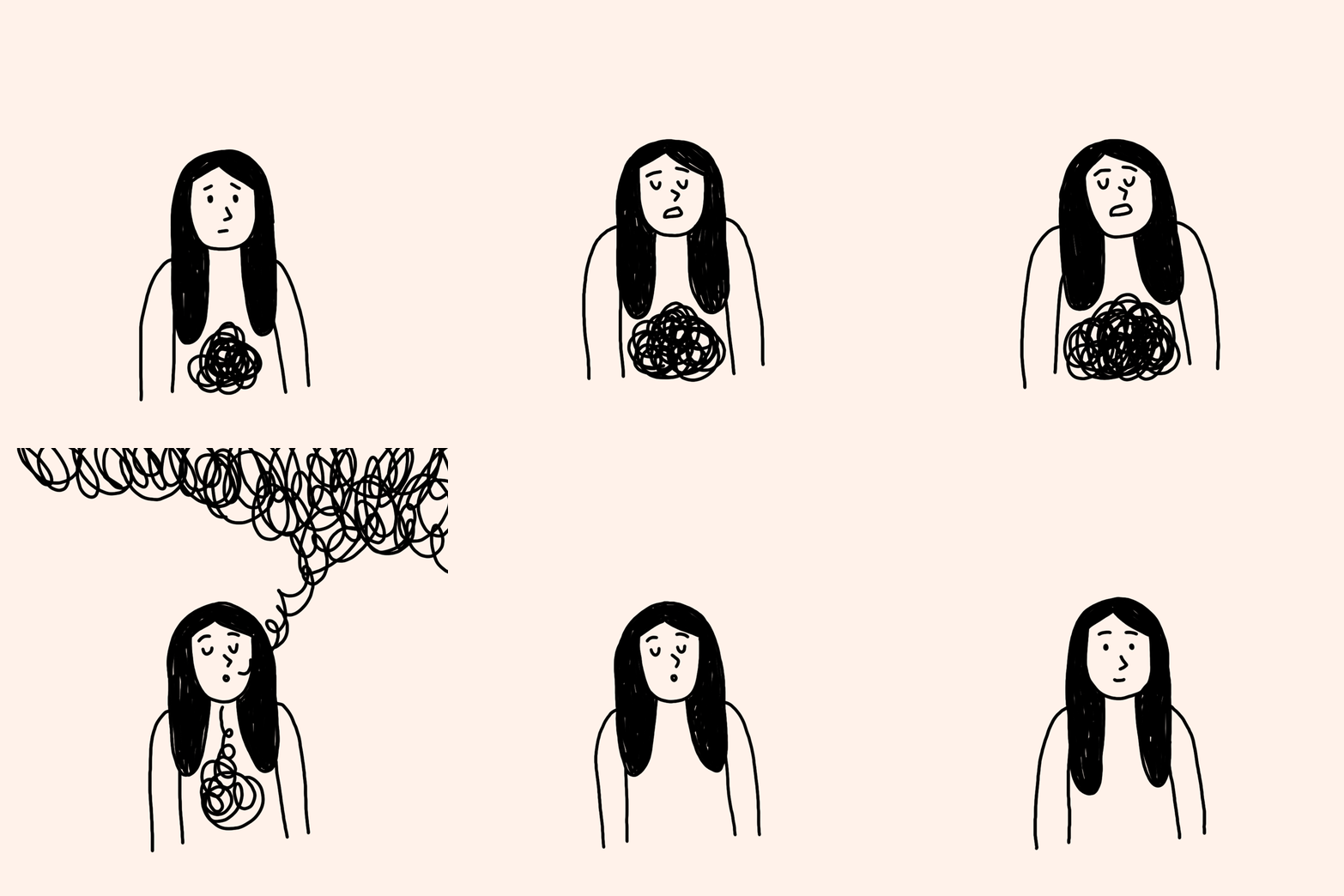
What is Be
From Figma prototype to working iOS app, in one semester
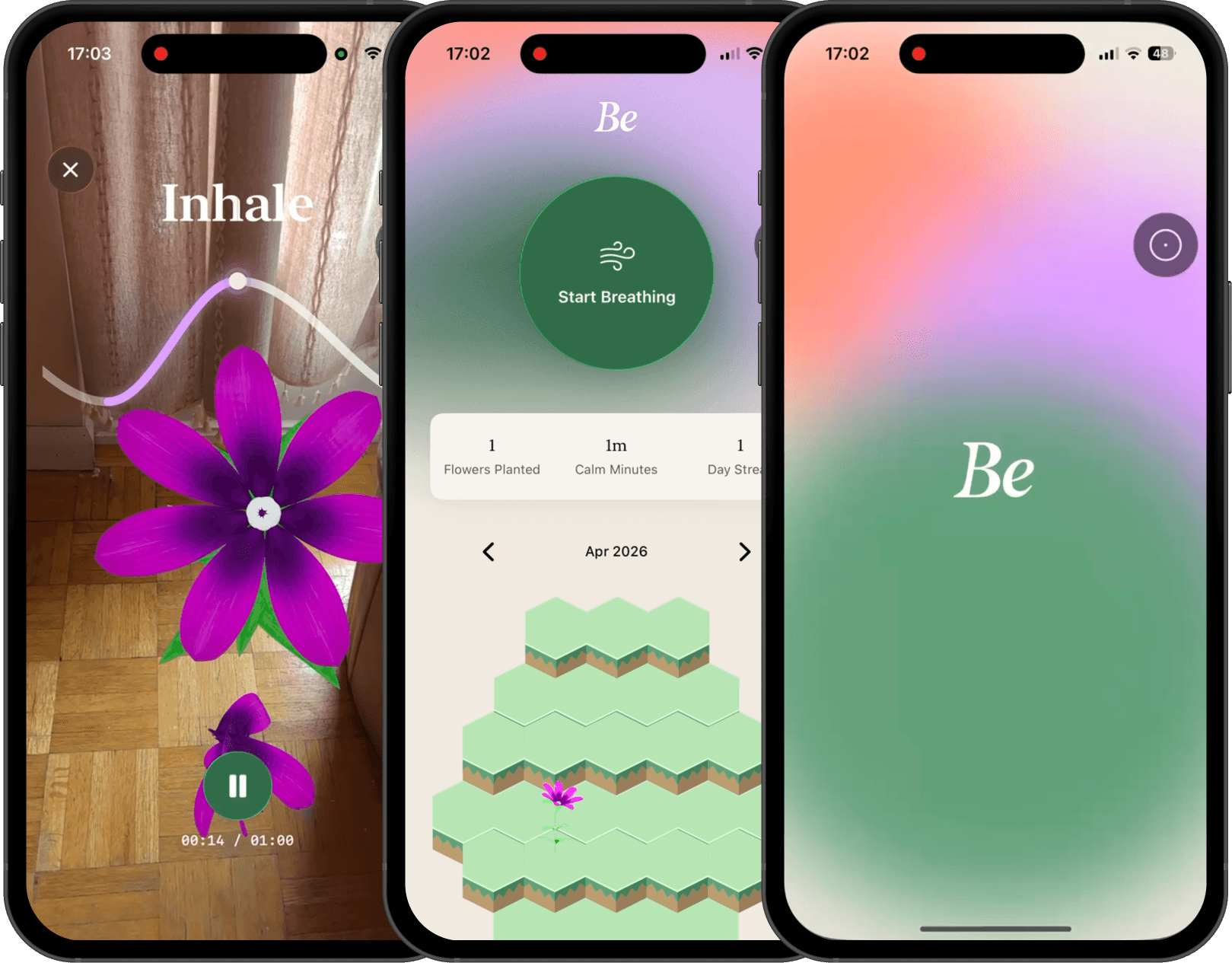
Be was my final semester graduation project at George Brown College — an iOS AR app that guides you through a breathing exercise using a 3D flower placed in your real space. As you inhale, the flower blooms. As you exhale into the microphone, the petals detach and drift into your room. When the session ends, the flower is saved to your personal digital garden — a growing record of every moment you chose to breathe through the stress.

Box breathing AR app — semester 5
Visual Language
Designed to hack the parasympathetic nervous system
I chose sage green for nature and rootedness. Lilac for the spiritual, the quiet, the inward. Coral for warmth, the feeling of something alive.
For typography, I wanted a serif for headings, something elegant, not clinical. Turns out iOS's default type system was already exactly that. New York for headings, SF Pro for body. I kept it native and spent the time elsewhere.

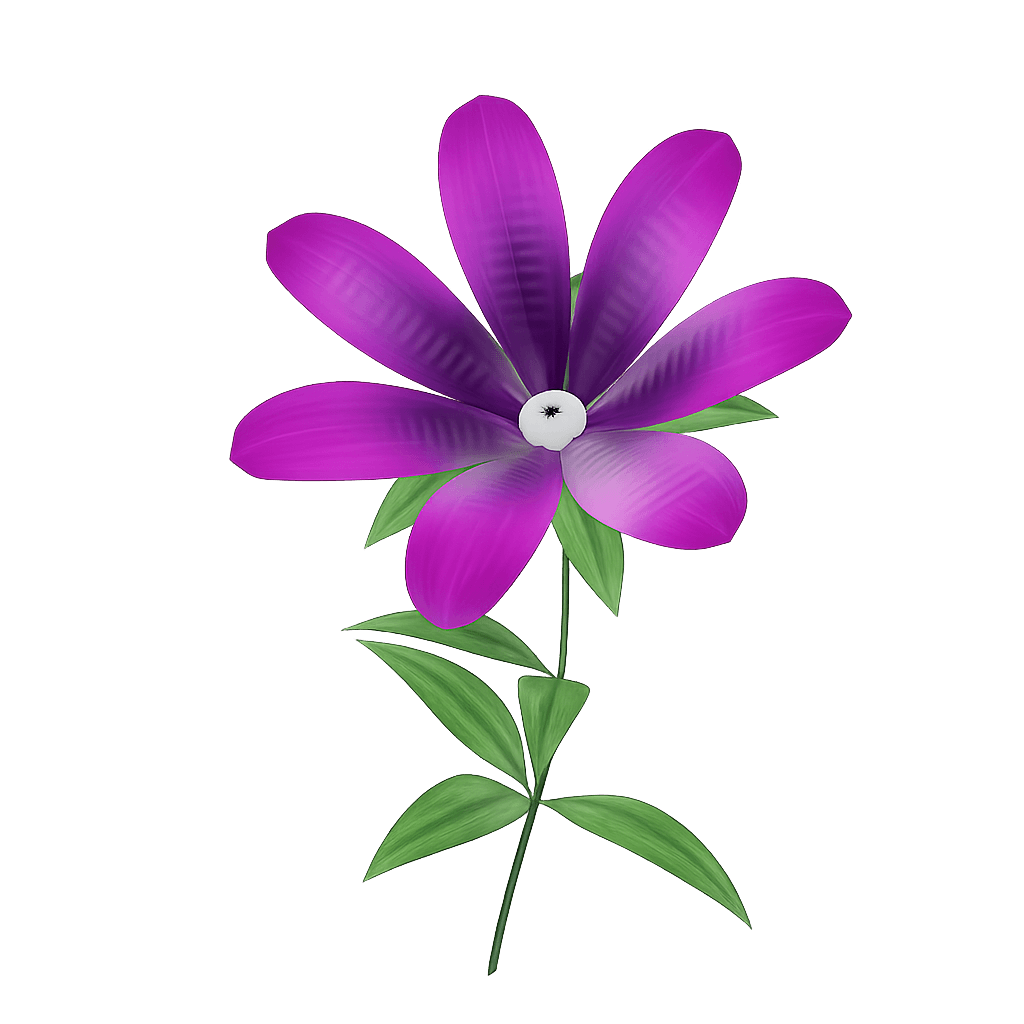
Downloaded as a base model, rebuilt vertex by vertex in Maya, animated in RealityKit.
Every asset needed to communicate stillness without being precious about it with flower at the core of the experience.
Tested in the real world
Be was exhibited at YES!
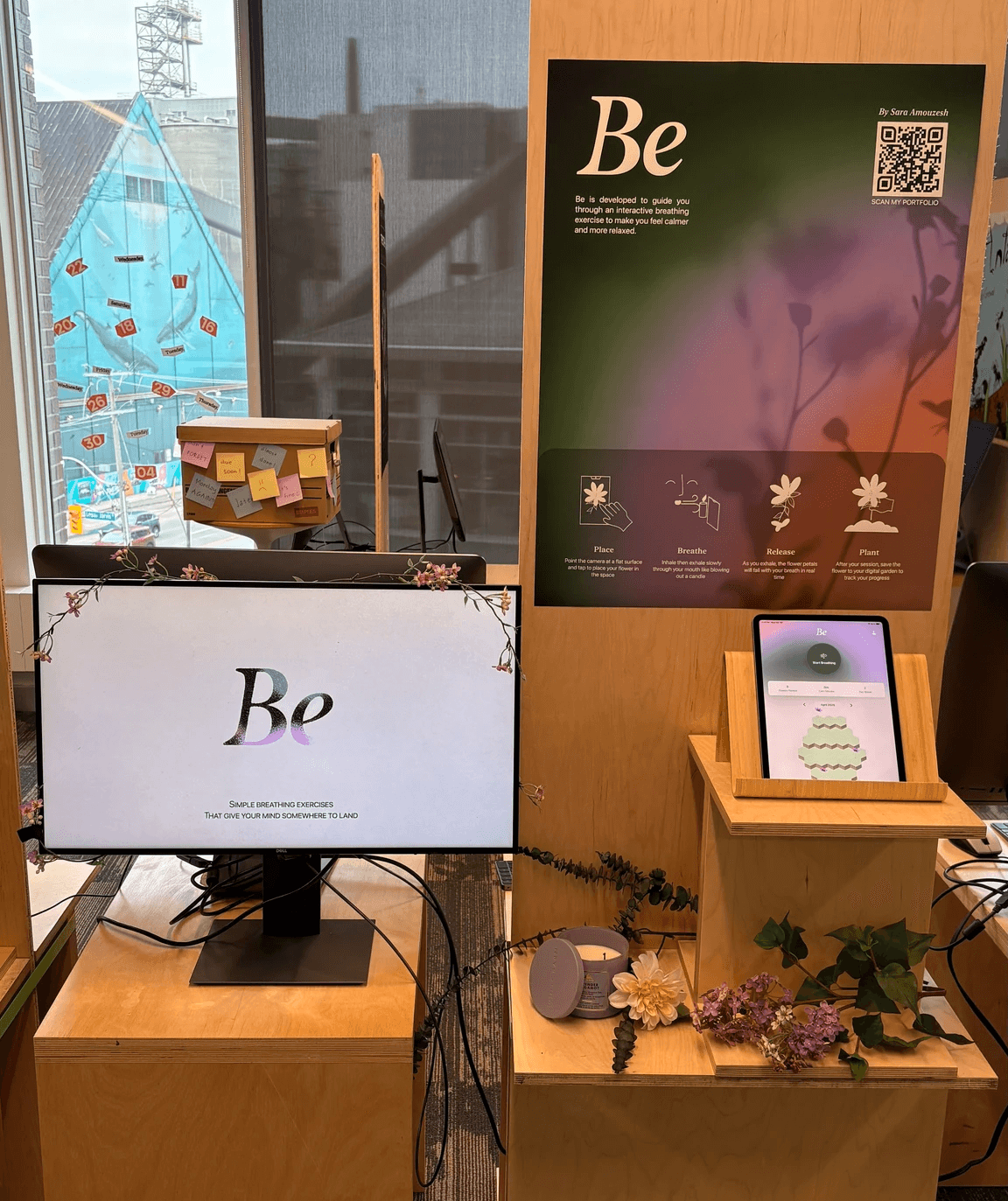
Be setup at YES!26 — poster, promo video, working iPad demo
What I observed
People picked it up and understood it. In a room already full of competing stimulation — strangers, noise, other projects pulling for attention — some of them were still willing to breathe into the microphone, quietly, a little shyly, and watch their petals fall.
The app had never been tested in worse conditions. It passed.
That confirmed something: the interaction was simple enough to work when someone's cognitive load was already full.
Which is exactly when you need it most.
Reflection
The biggest gap in this project is formal user testing. I tested the box breathing version with real people and let that failure shape Be. — but Be. itself was never formally tested before the exhibition. The show became the first real test, which is late. With more time, I'd run directed sessions with people who manage anxiety regularly — not design students, not supportive friends. I'd focus on the AR placement flow specifically: scanning for a surface is the highest-friction moment in the experience, and it's the first thing a new user encounters.
Be currently guides one breathing technique — a short inhale, long exhale. I'd want to expand that. Box breathing, 4-7-8, physiological sigh — each one is a different rhythm, and each could have its own interaction, its own visual response. The core principle stays: give the brain something to land on.
I'd also push the garden further. Right now it's a record. It could be a space you actually tend — different flowers, seasonal tiles that shift with the calendar, a growing collection that's yours to customize.
Thank you :)


